
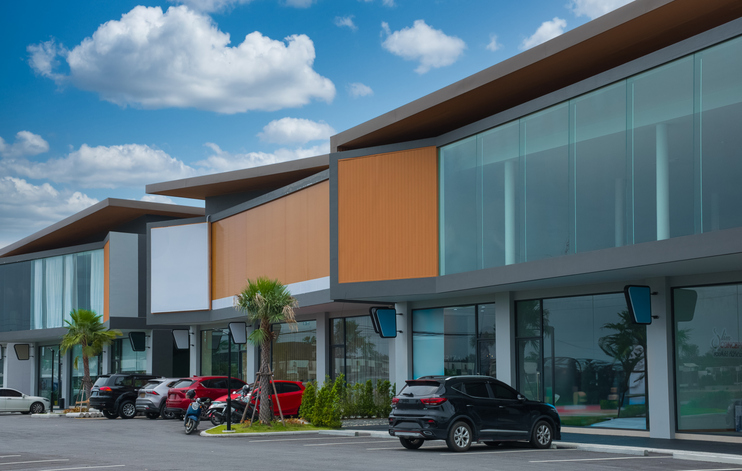
In the Chicago commercial real estate market, investors evaluating new acquisition opportunities are increasingly weighing two resilient asset classes: retail and industrial. While industrial properties have benefited from Chicago’s position as one of the nation’s most important logistics and distribution hubs, retail properties have continued to attract attention in well-located neighborhood, grocery-anchored, and mixed-use environments.
For investors early in the decision-making process, the question is not whether retail or industrial is universally better. The more important question is which asset class aligns with your investment objectives, management preferences, risk tolerance, and long-term portfolio strategy.
This comparison explores the investment case for both property types, highlights key considerations for each, and provides insight into how Chicago market dynamics may influence the decision-making process. The right choice often comes down to local market conditions, tenant demand, and the role the asset will play within a broader investment portfolio.
Chicago Market Perspective: Evaluating Retail and Industrial Opportunities
Chicago presents a unique environment because it offers compelling opportunities in both retail and industrial real estate. Investors considering industrial assets are often drawn to the region’s extensive transportation infrastructure, including major interstate corridors, rail networks, airports, and access to national distribution routes. These characteristics have helped establish the metropolitan area as a key logistics and supply chain market.
At the same time, retail investment opportunities continue to emerge across Chicago’s diverse neighborhoods and suburban communities. Grocery-anchored centers, service-oriented retail, and properties that serve daily consumer needs can offer stability in locations with strong residential density and established traffic patterns.
For many investors, the decision comes down to investment style. Those seeking longer lease terms and lower day-to-day management involvement may gravitate toward industrial assets. Investors who value tenant diversification, visibility, and opportunities for active asset management may find retail properties more attractive.
Chicago’s size and economic diversity also create opportunities to balance both asset classes within a single portfolio, allowing investors to pursue income stability while maintaining exposure to multiple demand drivers across the market.
The Case for Industrial Property Investment
Industrial real estate’s post-pandemic run is well documented, but the fundamentals that drove it have not disappeared — they have stabilized. Industrial cap rates have reached a stable plateau in the upper 6% range, supported by stabilizing vacancy rates, falling construction starts, and e-commerce demand returning to its pre-pandemic growth trend. For an asset class that was trading at historic lows just a few years ago, that plateau represents a more balanced and sustainable entry environment for new investors.
The structural demand drivers remain intact. E-commerce fulfillment, third-party logistics, nearshoring and onshoring of manufacturing, and data infrastructure all require physical industrial space. New supply is constrained heading into 2026, a dynamic that supports occupancy and rent growth for well-positioned assets even as vacancy has ticked up in oversupplied large-format markets.
From a risk profile standpoint, industrial is among the most defensible positions in CRE. CMBS industrial distress sits at just a fraction of the rate affecting office, signaling that lenders view industrial as the lowest-risk sector. Lease structures typically run long, often with NNN terms that shift operating expenses to the tenant, producing predictable income with limited management intensity.
The nuance investors need to understand: not all industrial is the same. Vacancy pressure is heavily concentrated in large-format distribution assets in markets that saw outsized supply growth — Austin, Phoenix, Las Vegas, and similar Sun Belt metros. Smaller bay, infill, and flex industrial in supply-constrained markets continue to perform well. Asset selection and submarket knowledge matter considerably more than the asset class label. While Chicago has experienced many of the same industrial demand drivers, performance can vary significantly by submarket, making local market knowledge especially important when evaluating opportunities.
The Case for Retail Investment Property
Retail’s rehabilitation as a serious investment category is one of the more significant CRE storylines of the current cycle. Retail is now the third most sought-after property type among investors in 2026, trailing only multifamily and industrial, according to a major industry survey of investor intentions. That shift reflects a fundamental change in the supply picture and the tenant mix driving retail performance.
New retail construction is expected to fall 37% in 2026, keeping supply exceptionally tight and supporting rent growth in well-located assets. The retailers driving leasing demand are not discretionary — they are grocers, discount and off-price operators, service providers, and restaurants, all of which require physical locations and carry recession-resistant characteristics. Grocery-anchored centers, neighborhood and strip centers, and high-income suburban corridors are positioned to outperform for both occupancy and rent growth in 2026.
From a financial structure standpoint, retail offers investors a range of entry points. Grocery-anchored centers command premium pricing, with cap rates in the 5.25% to 5.5% range for best-in-class assets in top markets. Unanchored strip centers and neighborhood centers in strong demographic areas offer wider spreads and, for investors comfortable with more active asset management, meaningful upside through lease-up and tenant mix optimization.
The nuance here is equally important: retail’s strong fundamentals are not uniform across the category. Performance diverges sharply by format and location, with weaker Class B and C malls and older power centers continuing to lag due to higher capital improvement needs and slower backfill activity. Investors who approach retail as a monolithic category miss the distinction between the assets that are thriving and those that are still working through structural challenges.
How to Choose: Matching the Asset Class to Your Situation
With both asset classes offering genuine opportunities in 2026, the decision comes down to how each aligns with an investor’s specific goals, resources, and operating preferences. The following factors tend to drive the choice.
Management intensity
Industrial — particularly NNN-leased warehouse and distribution assets — is among the most passive investment structures available in CRE. Tenants handle operating expenses; the landlord collects rent. Retail, depending on format, can range from similarly passive (single-tenant NNN retail) to moderately active (multi-tenant strip center requiring ongoing leasing and tenant management). Investors seeking limited day-to-day involvement tend to gravitate toward industrial or single-tenant retail.
Lease structure and income predictability
Industrial leases are typically longer-term, often running five to 10 years or more with built-in rent escalations. Multi-tenant retail carries shorter average lease terms but more diversified income across multiple tenants, which reduces single-tenant concentration risk. The right structure depends on whether an investor prioritizes income stability or income diversity.
Entry price and market access
Industrial assets in core logistics markets carry premium pricing, particularly for newer vintage Class A products. Retail offers more accessible entry points in secondary markets and suburban corridors where institutional capital has been slower to return. For investors working with a defined capital budget, the wider range of retail formats often provides more flexibility.
Portfolio diversification goals
Investors already holding one asset class may find the other provides meaningful diversification. Industrial and retail have different demand drivers, tenant profiles, and economic sensitivities. A portfolio that includes both benefits from that divergence across market cycles.
Local market dynamics
An industrial opportunity in Chicago’s logistics corridors may present very different fundamentals than a similar property elsewhere in the country. Likewise, retail performance can vary significantly between urban neighborhoods, suburban trade areas, and lifestyle-oriented retail districts. Local market knowledge remains a prerequisite to successful asset selection.
Explore Chicago Retail and Industrial Investment Opportunities
Whether you’re evaluating a neighborhood retail center, a last-mile industrial facility, or a diversified acquisition strategy, understanding local market conditions is essential. Connect with the team at SVN | Chicago Commercial to discuss current retail and industrial investment opportunities throughout Chicago and the surrounding suburbs. Our advisors can help evaluate market opportunities, identify potential risks, and develop an acquisition strategy aligned with your investment objectives.
Key Takeaways
Industrial property investment and retail investment property are two of the strongest-performing commercial real estate asset classes in 2026. Neither is universally superior — the right choice depends on how each aligns with a specific investment profile. Keep these factors in mind:
- Industrial property investment offers low management intensity, long-term NNN lease structures, and near-historic-low distress rates, but performance varies significantly by asset size and submarket.
- Retail investment property is benefiting from a supply-constrained environment and strong institutional demand, with grocery-anchored and neighborhood centers leading performance.
- The right asset class is determined by management preferences, lease-structure priorities, entry price point, portfolio diversification goals, and local market conditions.